
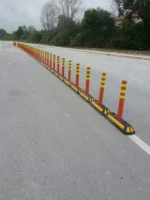
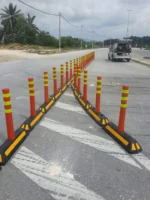
Traffic Lane Seperator
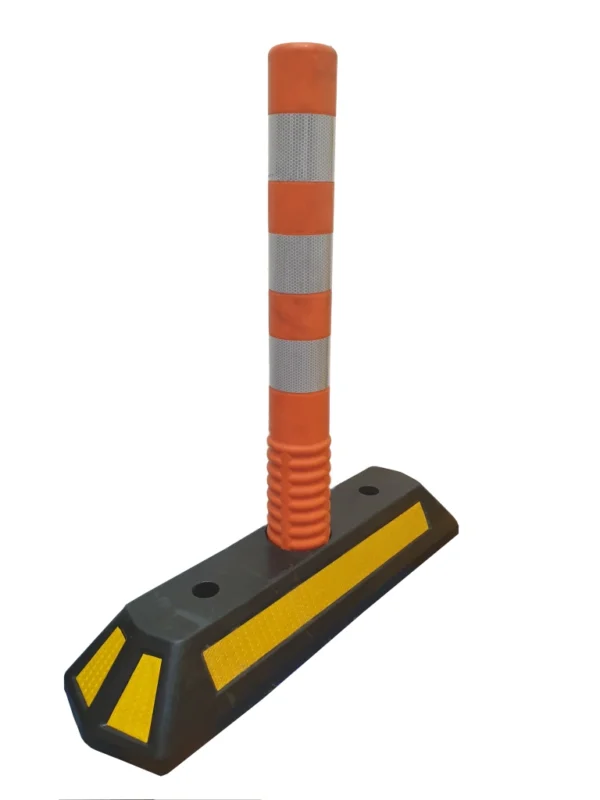
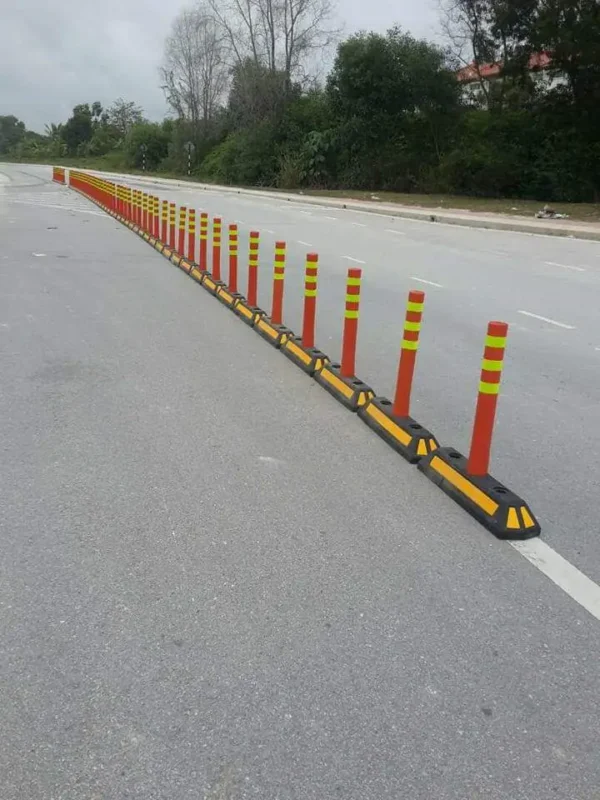
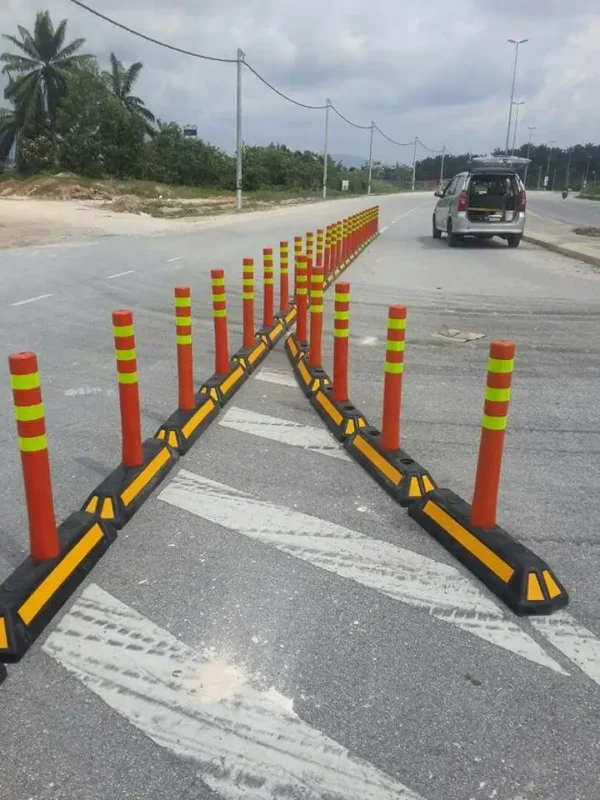
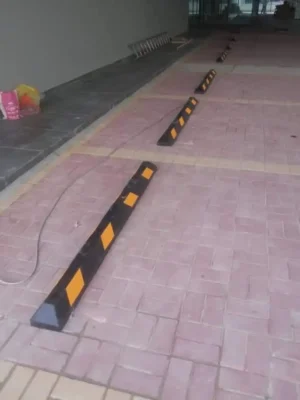
A traffic lane separator made from recycled rubber and featuring flexible poles is a sustainable and versatile solution for managing traffic flow and enhancing safety on roadways. Here’s an overview of the key features, functions, materials, and installation aspects of a traffic lane separator with recycled rubber and flexible poles:
Materials:
- Recycled Rubber:
- The main material for the base or body of the traffic lane separator is recycled rubber. This eco-friendly choice not only contributes to waste reduction but also provides flexibility and durability.
- Flexible Poles:
- The separator incorporates flexible poles made from materials like polyurethane or other elastomers. These poles can bend upon impact, minimizing damage to vehicles and the separator itself.
Key Features and Functions:
- Modular Design:
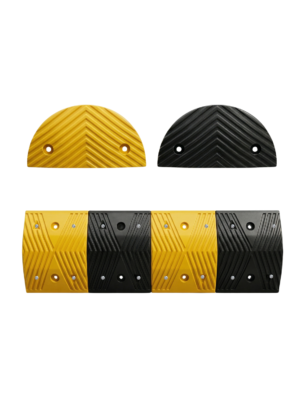
- Traffic lane separators with recycled rubber and flexible poles often feature a modular design. This allows for easy assembly and adjustment based on specific lane configurations or traffic management requirements.
- Flexibility:
- The flexible poles provide a degree of flexibility, allowing them to yield when vehicles come into contact. This reduces the risk of damage to both the separator and the vehicles, enhancing safety on the road.
- Reflective Elements:
- Reflective materials or coatings are often integrated into the design for enhanced visibility, especially during low-light conditions. This contributes to improved safety by making the lane separator more noticeable to drivers.
- Weather Resistance:
- Recycled rubber and flexible pole materials are chosen for their resistance to weather conditions. This ensures the longevity and effectiveness of the lane separator in various environments.
- Environmentally Friendly:
- The use of recycled rubber aligns with environmental sustainability goals by repurposing materials that might otherwise go to waste. This makes the traffic lane separator an eco-friendly choice.
- Easy Installation and Maintenance:
- These lane separators are designed for easy installation and maintenance. The modular components and lightweight nature of the materials simplify handling and adjustments on the road.
Installation and Varieties:
- Surface Mounting:
- Traffic lane separators can be surface-mounted on roadways using adhesives or anchors. The modular design allows for flexibility in configuration, accommodating various lane widths and layouts.
- Removable Options:
- Some lane separators may be designed for easy removal, allowing for temporary installations or adjustments during construction projects or events.
- Variety in Pole Height:
- Different models may offer variations in pole height to accommodate various traffic control needs. For instance, taller poles may be used to discourage lane changes, while shorter poles may indicate a less restrictive separation.
- Color Options:
- These lane separators may come in different colors for better visibility and to convey specific traffic management information.
In summary, a traffic lane separator featuring recycled rubber and flexible poles is an innovative and sustainable solution for managing traffic lanes. It combines durability, flexibility, and environmental consciousness to contribute to effective traffic flow and safety on the road.
24 people are viewing this right now

Guaranteed safe & secure checkout
Reviews
Questions
There are no question found.









Rating & Review
There are no reviews yet.